Loading movie...
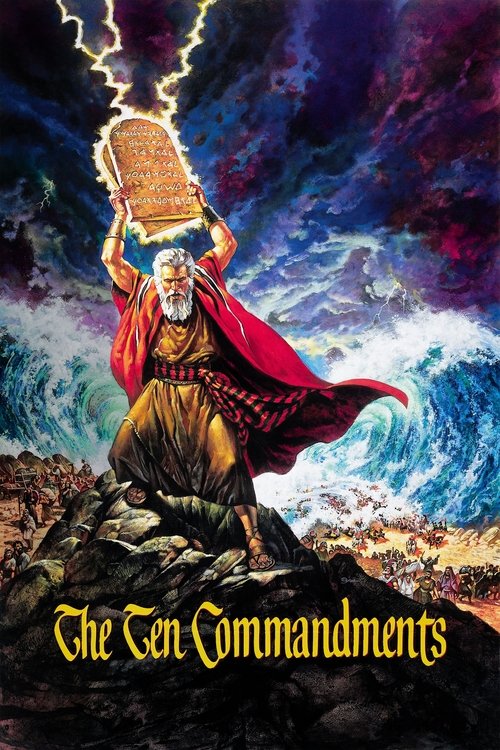
The Ten Commandments (1956)
Director: Cecil B. DeMille
Cast: Charlton Heston, Yul Brynner, Anne Baxter, Edward G. Robinson
Runtime220 min
RatingU
Your reaction:
Watchlist:
Escaping death, a Hebrew infant is raised in a royal household to become a prince. Upon discovery of his true heritage, Moses embarks on a personal quest to reclaim his destiny as the leader and liberator of the Hebrew people.
Critical Reception & Ratings
The Ten Commandments (1956) is widely considered a classic biblical epic, critically acclaimed for its grand scale and impressive visuals. The film won several Academy Awards, including Best Visual Effects, and is regarded as one of the landmark achievements of director Cecil B. DeMille's career. With an IMDb rating of 8.1 and a Rotten Tomatoes score of 87%, the film has endured as a beloved cinematic interpretation of the Moses story.
Why you might like this:
Directed by the legendary Cecil B. DeMille in 1956, The Ten Commandments is an epic biblical drama that showcases Charlton Heston's powerful performance as Moses, the Hebrew prince turned deliverer of his people. With its stunning visuals, grand scale, and sweeping narrative, this film offers an immersive exploration of faith, freedom, and the human struggle against oppression.
Available on:




About
The Ten Commandments is a 1956 American epic biblical drama film produced, directed, and narrated by Cecil B. DeMille, shot in VistaVision, and released by Paramount Pictures. Based on the Bible's Book of Exodus and other sources, it dramatizes the story of the life of Moses, an adopted Egyptian prince who becomes the deliverer of his real brethren, the enslaved Hebrews, and thereafter leads the Exodus to Mount Sinai, where he receives, from God, the Ten Commandments. The film stars Charlton Heston in the lead role, Yul Brynner as Rameses, Anne Baxter as Nefretiri, Edward G. Robinson as Dathan, Yvonne De Carlo as Sephora, Debra Paget as Lilia, and John Derek as Joshua; and features Sir Cedric Hardwicke as Sethi I, Nina Foch as Bithiah, Martha Scott as Yochabel, Judith Anderson as Memnet, and Vincent Price as Baka, among others.
Read more on Wikipedia →