Loading movie...
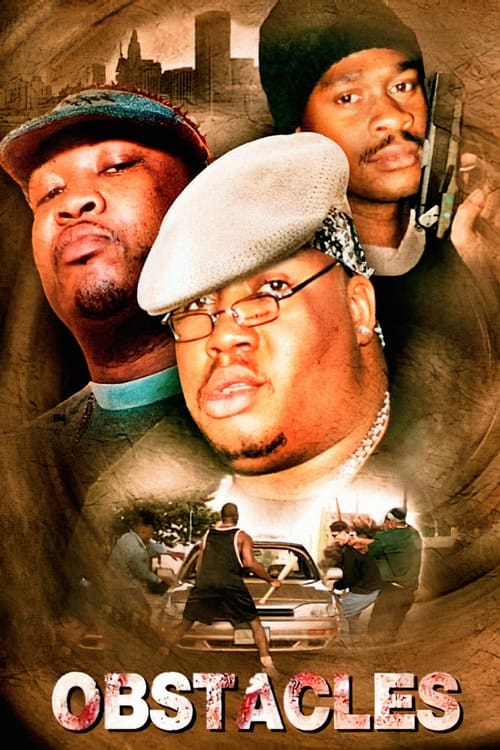
Obstacles (2000)
Director: Harry Mok
Cast: E-40, Brian Hooks, Omar Benson Miller, Jaqueline Fleming
Runtime90 min
RatingR
Your reaction:
Watchlist:
Enemies since back in the day, two homeboys take a different path in life. College bound Daryll, desperate to keep a roof over his family's head and seduced by the money, power and respect of the hustler lifestyle moves in on his old nemesis' turf setting off a battle over territory in a war that rages throughout the inner city.
Why you might like this:
Obstacles (2000) offers a unique blend of action, drama, comedy, and crime that explores the challenging choices faced by two childhood friends on divergent paths. Directed by Harry Mok, the film features standout performances from E-40, Brian Hooks, and Omar Benson Miller that bring depth and nuance to the inner-city setting and themes of loyalty, power, and personal growth.
About
Obstacles to receiving mental health services among African American youth have been associated with stigma and shame, child-related factors, treatment affordability, availability, and accessibility, clinician and therapeutic factors, the school system, religion/spirituality, and social networks. When examining the prevalence rates of African American youth that have experienced cognitive and behavioral challenges, the underutilization of mental health services is startling. The National Comorbidity Survey-Adolescent Supplement revealed that 46.8% of African Americans under 18-years-old may have a mental health disorder. Additionally, African American children between the ages of five- and twelve-years old commit suicide at approximately double the rate of their White counterparts. Furthermore, the data from the Youth Risk Behavior Surveillance System (YRBSS) showed that Black students commit suicide at higher rates than White students. With all this information in mind, only three-quarters of African American children receive mental health care. 76.5% of African American youth from the ages of six to seventeen have mental health issues that need help, but their needs are not met. 50% to 75% of urban community-dwelling Black children and adolescents do not receive mental health care. A study showed that African American youth experiencing a major depressive episode are more unlikely to seek aid or speak to anyone about how they feel. 13% to 52% of African American child and adolescents who do not receive the mental health care that they need are at higher risk for detrimental health outcomes; hence, the importance of identifying the obstacles that may prevent unaddressed mental health service needs.
Read more on Wikipedia →