Loading movie...
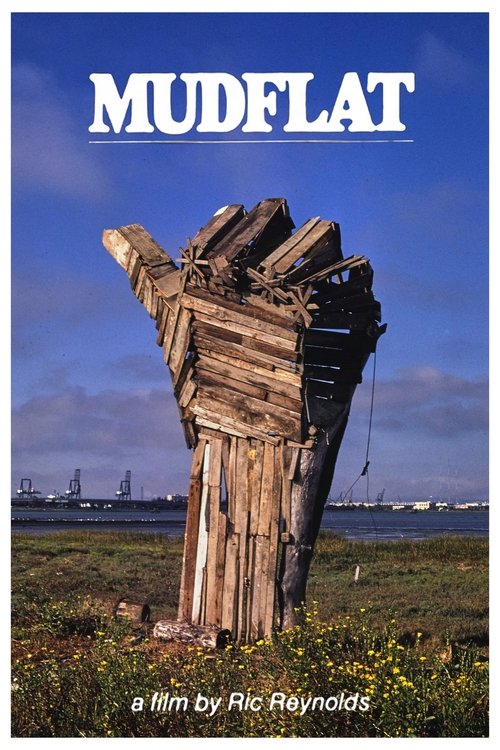
Mudflat (1980)
Director: Richard A. Reynolds
Cast: Scott Beach, Bill Irwin, Walt Zucker, Tony Puccio
Runtime27 min
Your reaction:
Watchlist:
Years ago, artists would walk around the muck at the edge of the San Francisco Bay in Emeryville, and build loads of sculptures out there on the flats, created from driftwood and found objects that drivers would enjoy as they motored south on the old Highway 17 (known in numerous radio ads as 'Highway 17, The Nimitz'). Grabbing material off someone else’s work was considered fair game and part of the fun, and contributed a kinetic dynamic to the ongoing display. Now the place is a park, and the sculptures are gone, but you can see what it used to be like in this neat and funny documentary by Ric Reynolds, augmented by Erich Seibert’s wonderful musique-concrète/time-lapse sequences. The flashback circus sequence includes Scott Beach and Bill Irwin. Sculptors interviewed include Walt Zucker, Tony Puccio, Robert Sommer, Ron & Mary Bradden, and Bob Kaminsky.
Critical Reception & Ratings
Mudflat, a 1980 documentary directed by Richard A. Reynolds, has received positive critical reception for its exploration of the artistic community that once thrived on the mudflats of the San Francisco Bay in Emeryville. The film's whimsical depiction of the kinetic sculptures created from found objects has been praised, and it is considered a unique and engaging look at a bygone era of artistic expression in the region.
Why you might like this:
Fans of offbeat documentaries and kinetic sculptures will particularly enjoy this 1980 film directed by Richard A. Reynolds, which captures the lively, creative artworks and their ephemeral nature at the edge of the San Francisco Bay in Emeryville. The film features insightful interviews with key sculptors like Scott Beach, Bill Irwin, Walt Zucker, and Tony Puccio, along with mesmerizing time-lapse sequences that bring the site to life.
About
Mudflats or mud flats, also known as tidal flats or, in Ireland, slob or slobs, are coastal wetlands that form in intertidal areas where sediments have been deposited by tides or rivers. A global analysis published in 2019 suggested that tidal flat ecosystems are as extensive globally as mangroves, covering at least 127,921 km2 (49,391 mi2) of the Earth's surface. They are found in sheltered areas such as bays, bayous, lagoons, and estuaries; they are also seen in freshwater lakes and salty lakes alike, wherein many rivers and creeks end. Mudflats may be viewed geologically as exposed layers of bay mud, resulting from deposition of estuarine silts, clays and aquatic animal detritus. Most of the sediment within a mudflat is within the intertidal zone, and thus the flat is submerged and exposed approximately twice daily.
Read more on Wikipedia →