Loading movie...
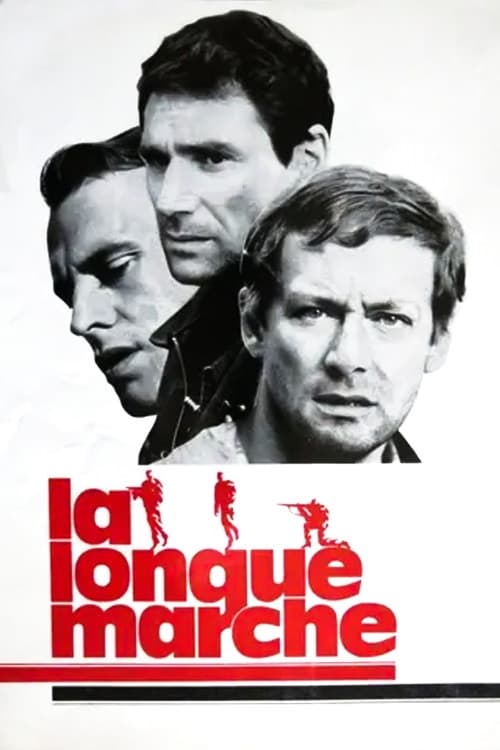
Long March (1966)
Director: Alexandre Astruc
Cast: Maurice Ronet, Jean-Louis Trintignant, Jean-Pierre Kalfon, Robert Hossein
 6.1
6.1Runtime90 min
Your reaction:
Watchlist:
In June 1944, a young doctor, Chevalier, under the threat of guns, is forced to treat a wounded man in a camp of resistance fighters (maquisards). He recognizes the man, minister of the Third Republic, called Morel by his companions. Carnot, the chief of the maquisards, is suspicious of a doctor who expressly disapproves of the resistance and wants to have him shot as soon as he has treated Morel. Philippe, who is second in command, intervenes in favor of the Chevalier. Meanwhile, peasants denounce the maquisards to the Nazis and the camp is surrounded by the Germans. The camp is saved thanks to Philippe who takes command of the group. He decides to leave the shelter and they begin the long march through the Cévennes to rally maquisard Napoleon in the Vercors...
Critical Reception & Ratings
Long March (1966), directed by Alexandre Astruc, is a critically acclaimed drama set during World War II. The film received a 6.1/10 rating on IMDb, indicating moderately positive audience reception. However, it does not appear to have received any major awards recognition.
Why you might like this:
Directed by the acclaimed Alexandre Astruc, Long March (1966) is a gripping wartime drama that offers a nuanced and thought-provoking exploration of resistance, morality, and human nature. With captivating performances from Maurice Ronet, Jean-Louis Trintignant, and Jean-Pierre Kalfon, the film immerses viewers in the difficult choices and moral dilemmas faced by the French Resistance fighters during the Nazi occupation.
About
The Long March was a military retreat by the Chinese Red Army and Chinese Communist Party (CCP) from advancing Kuomintang (KMT) forces during the Chinese Civil War, occurring between October 1934 and October 1935. About 100,000 troops retreated from the Jiangxi Soviet and other bases to a new headquarters in Yan'an, Shaanxi, traversing some 10,000 kilometres. About 8,000 troops ultimately survived the Long March.
Read more on Wikipedia →