Loading movie...
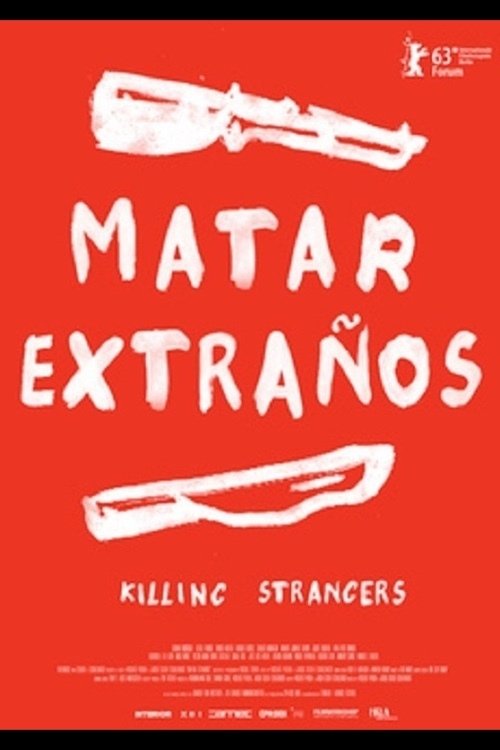
Killing Strangers (2013)
Director: Nicolás Pereda
Cast: Gabino Rodríguez, Tenoch Huerta Mejía, Harold Torres, Esthel Vogrig
Runtime63 min
Your reaction:
Watchlist:
A series of auditions is taking place in a museum-like living room. Various men improvise or deliver prepared lines, rehearse gestures and slogans, aim guns, and collapse as if mortally wounded. The theme of revolution is repeatedly invoked. In between, there are scenes of a desert landscape. Three men seeking to join the Mexican Revolution at the beginning of the last century have lost their way. Conflicts smolder among them, water is running low, and mutual mistrust is beginning to take hold. Placing the reenactment of a possible historical event alongside the preparations for it serves to underline the theatricality of every cinematic account of history. Moreover, on a kind of playful meta-meta-level, the scenes in which the actors feel their way through set pieces from a Beatles song or standard battle slogans allow the viewer to witness the simultaneous construction and deconstruction of a collective myth of revolution.
Why you might like this:
Directed by Nicolás Pereda in 2013, Killing Strangers blends documentary-style realism with meta-theatrical elements, inviting viewers to interrogate the construction of historical narratives through its layered depiction of would-be revolutionaries improvising battle scenes and rehearsing slogans. This distinctive approach will particularly resonate with fans of challenging, thought-provoking cinema that defies conventional storytelling.
About
"Killing Strangers" is a song by American rock band Marilyn Manson. It is the first track from their ninth studio album, The Pale Emperor (2015). It was written and produced by the eponymous lead singer and Tyler Bates and was first released when it appeared in Keanu Reeves's 2014 film John Wick. The song was inspired by the PTSD experienced by Manson's father after his time spent serving in the US Armed Forces during the Vietnam War. The track peaked within the top ten of the Billboard Hard Rock Digital Songs. The song garnered generally positive reviews from music critics, with several publications favorably comparing the song to several of the band's previous album openers.
Read more on Wikipedia →