Loading movie...
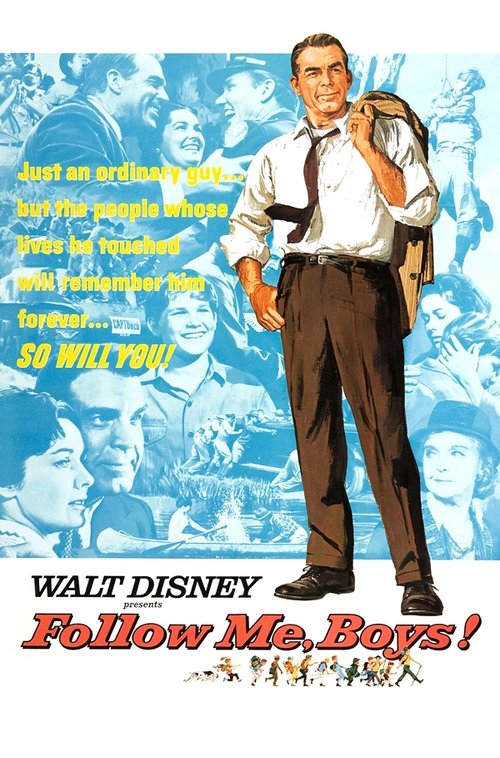
Follow Me, Boys! (1966)
Director: Norman Tokar
Cast: Fred MacMurray, Vera Miles, Lillian Gish, Charles Ruggles
Runtime131 min
Your reaction:
Watchlist:
Lem Siddons is part of a traveling band who has a dream of becoming a lawyer. Deciding to settle down, he finds a job as a stockboy in the general store of a small town. Trying to fit in, he volunteers to become scoutmaster of the newly formed Troop 1. Becoming more and more involved with the scout troop, he finds his plans to become a lawyer being put on the back burner, until he realizes that his life has been fulfilled helping the youth of the small town.
Why you might like this:
Fans of heartwarming family dramas and the acting talents of Fred MacMurray will enjoy the charming story of Follow Me, Boys! (1966), directed by Norman Tokar. The film beautifully captures the impact a devoted scoutmaster can have on a small town community, exploring themes of purpose, service, and the enduring power of mentorship.
About
Follow Me, Boys! is a 1966 American comedy-drama film produced by Walt Disney Productions. It is an adaptation of the 1954 novel God and My Country by MacKinlay Kantor and was the final film released by Walt Disney Productions in Walt Disney's lifetime, with Disney dying exactly two weeks after the film's premiere. The film stars Fred MacMurray, Vera Miles, Lillian Gish, Charles Ruggles and Kurt Russell, and is co-produced by Walt Disney and Winston Hibler, directed by Norman Tokar and written by Louis Pelletier. It is one of the few films featuring the Boy Scouts of America and is Disney's paean to the Boy Scouts. The title song "Follow Me, Boys!" was written by studio favorites Robert and Richard Sherman. After the film's production, the Boy Scouts of America considered using the song as their anthem, but efforts toward the end were dropped. The Boys' Life magazine included a teaser article of the film. Follow Me, Boys! was the first of ten Disney films in which Russell appeared over the next ten years. A DVD version was released on February 3, 2004 by Walt Disney Home Entertainment, although it is in 4:3 pan and scan format, not the original 1.66:1 wide screen aspect ratio.
Read more on Wikipedia →